Welcome to JIECHENG



Leave Your Message
Welcome to JIECHENG
Picking the right Heat Resistant Insulation Tapeis super important, especially if you're dealing with different kinds of projects. The construction world, in particular, depends a lot on good-quality insulation tapes. I came across a study from Global Market Insights that says the market for heat-resistant materials, including insulation tapes, is expected to grow at about 6.5% annually from 2021 to 2027. That really shows how much folks are looking for reliable, long-lasting Insulation Solutions these days.
Dr. Emily Carter from Thermal Solutions Inc., who’s definitely an expert in this field, shared, “Choosing the right heat-resistant insulation tape can make a big difference in how long your project lasts.” And honestly, that’s so true — picking the right tape isn’t just about ticking boxes; it’s about safety and getting things to perform as they should. Different environments call for different types of tape, too. Some need to handle high voltage, while others need to stay stable under high temps.
When you’re choosing heat-resistant insulation tape, don’t overlook the details — things like how well the adhesive sticks and what temperature range it handles. At first glance, a lot of these tapes look pretty similar, but they actually serve very different purposes. So, it’s really crucial to match the tape’s specs with what you actually need, otherwise, you might end up regretting it — expensive mistakes, you know?
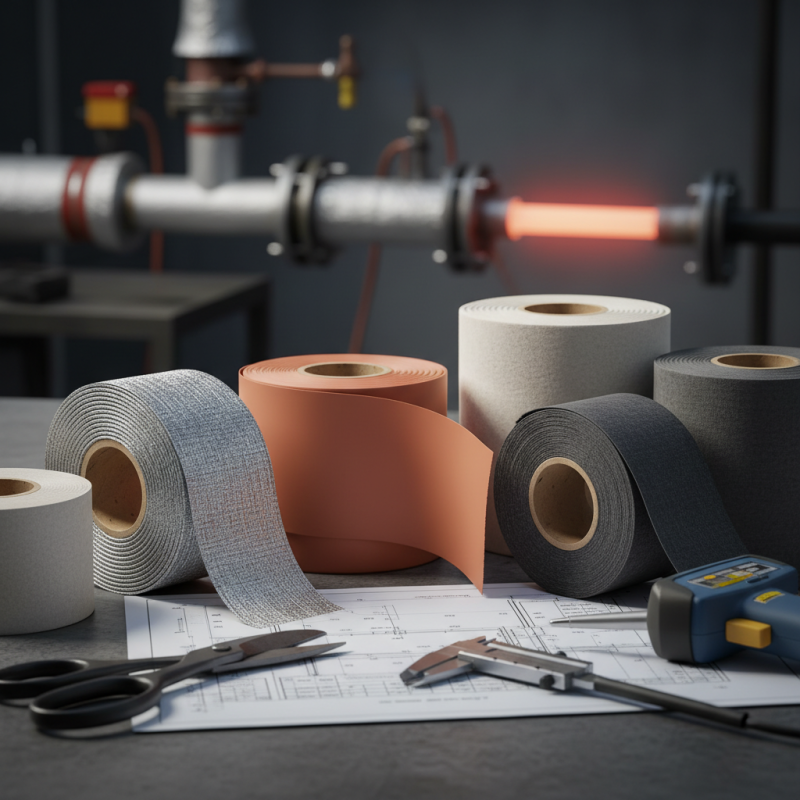
When selecting Heat Resistant Insulation tape, understanding heat resistance ratings is crucial. These ratings indicate how well the tape can withstand high temperatures. Common ratings include 180°C, 260°C, and even 300°C. Each rating serves different needs. Always check the specifications before making a purchase. A higher rating means better performance in extreme conditions.
Heat Resistant Fiberglass Tape is a popular choice for various applications. This tape can endure high temperatures without losing its adhesive properties. However, it is vital to consider the environment where the tape will be used. Some users find that the tape does not stick well on certain surfaces. Experimenting with different surfaces can lead to better results. It’s a common oversight to assume all surfaces are compatible.
Another aspect to ponder is the thickness of the tape. Thicker tapes often provide better insulation but may be harder to work with. Some users struggle with application, leading to uneven layers. This can affect the overall effectiveness. It’s essential to strike a balance. Heat resistance is only one part of the equation, after all.
| Tape Type | Max Temperature Rating (°C) | Material | Width (mm) | Length (m) |
|---|---|---|---|---|
| Polyimide Tape | 260 | Polyimide | 5 | 33 |
| Fiberglass Tape | 550 | Fiberglass | 19 | 50 |
| Silicone Tape | 260 | Silicone | 25 | 10 |
| Aluminum Foil Tape | 150 | Aluminum | 50 | 45 |
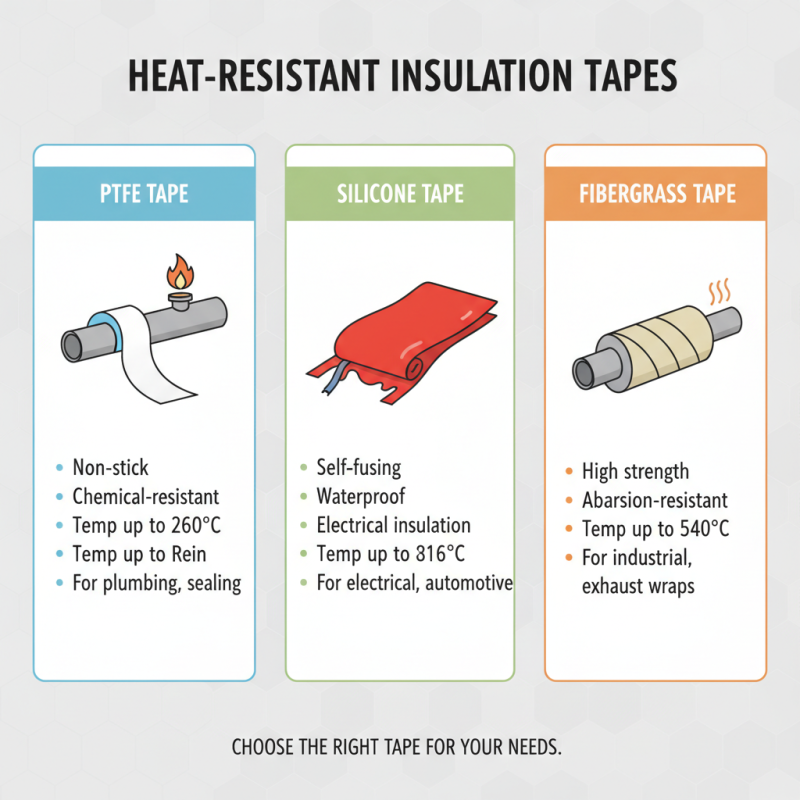
When selecting heat-resistant insulation tape, understanding the types available is crucial. Various materials serve specific needs. The most common types include PTFE tape, silicone tape, and fiberglass tape. Each type has unique properties and applications.
PTFE tape is renowned for its high-temperature resistance, often used in plumbing. It can withstand temperatures up to 260 degrees Celsius. Silicone tape, on the other hand, is flexible and ideal for electrical insulation. It remains effective even in extreme temperatures, ranging from -60 to 260 degrees Celsius. Fiberglass tape provides excellent durability. It is often favored in industrial applications due to its robust resistance to chemicals and heat.
According to a recent market report, the demand for heat-resistant tape will likely grow by 5.8% annually until 2025. This growth is due to increasing industrial applications and a rise in DIY projects. However, not all tapes perform equally in challenging environments. Users should consider factors like adhesive strength and temperature limits. Some tapes may degrade faster than expected, leading to early failures. Understanding these details is key to making an informed choice.
When choosing heat resistant insulation tape, consider its material. Various types offer different benefits. Common materials include fiberglass, silicone, and PTFE. Each material can withstand high temperatures effectively.
Fiberglass tape is often used in industrial applications. It can endure temperatures up to 1000°F (537°C). This makes it suitable for Thermal Insulation. Silicone tape, on the other hand, functions well in both high and low temperatures. It can handle ranges from-60°F to 500°F (-51°C to 260°C). Use it for electrical insulation in motors or heaters.
PTFE tape, known for its chemical resistance, is often used in plumbing. It withstands high torque and pressure. Its effectiveness is crucial in preventing leaks. Industry reports indicate that proper selection of materials impacts performance. Up to 30% of thermal losses can occur due to poor insulation choices. Therefore, understanding material properties is essential when selecting heat resistant insulation tape.
Heat resistant insulation tape has found extensive applications across various industries. In the automotive sector, it provides critical support in protecting wires and components from high temperatures. Research indicates that nearly 40% of automotive manufacturers utilize such tapes to enhance durability. This is especially important where engine heat is prevalent.
In the aerospace industry, the need for reliable Insulation Materials cannot be overstated. The average temperature within aircraft can exceed 200°F. As a result, heat resistant tapes play a vital role in ensuring safety and performance. Reports indicate that they are utilized in over 75% of wiring applications. However, improper application can lead to failures. Not all environments are similar, and specific conditions can affect tape performance.
Industrial manufacturing is another major area where heat resistant insulation tape is invaluable. Equipment often generates significant heat, leading to potential hazards. Studies reveal that more than 50% of manufacturers report thermal issues as a concern. By using the right tapes, companies can mitigate risks effectively. Yet, choice of material must reflect the specific conditions. Not all tapes offer the same level of safety or performance. This variability can lead to operational weaknesses.
When selecting heat resistant insulation tape, it’s crucial to evaluate several key factors. The temperature rating is the first consideration. High-quality tapes can withstand temperatures over 500°F (260°C). Data from industry reports highlights that Fiberglass Heat Resistant Tape often excels in this aspect. Many applications require tapes that will reliably perform under extreme conditions. Ensuring that the tape can handle specific heat levels is essential for safety and durability.
The adhesive quality is another factor to keep in mind. The strength of the adhesive impacts how well the tape sticks and holds over time. Test results indicate that tapes with silicone-based adhesives tend to perform better under heat. They maintain their grip even in fluctuating temperature situations. Additionally, resistance to chemicals and moisture can significantly affect performance. For example, some materials may break down faster when exposed to specific substances, making the longevity of the adhesive critical.
Thickness and width are also important. Thicker tapes offer better insulation properties but might be harder to manage during application. Industry research often finds that a balance must be struck between thickness and ease of use to ensure effective insulation without adding unnecessary complexity. Choosing the right size can also reduce waste, promoting efficiency.
When selecting heat resistant insulation tape, understanding heat resistance performance is crucial. The effectiveness of insulation tape often relies on its material composition. Many heat resistant tapes can withstand temperatures between 260°C to 300°C, depending on the type. For instance, silicone-based tapes often excel in high-temperature applications due to their high thermal stability. A study conducted by the Thermal Insulation Association found that materials with a higher thermal conductivity rating tend to perform better under sustained heat exposure.
Tips: Always check the temperature rating before purchase. Ensure it aligns with your specific needs.
Different testing standards exist for assessing heat resistance. ASTM D876 is commonly referenced for evaluating thermal performance. Tapes that pass this standard often demonstrate a practical application in demanding environments. However, it is not universally foolproof. Poor installation can diminish performance, even if the tape itself is of high quality.
Tips: Consider the environmental conditions where the tape will be used. Outdoors or indoors? This also affects performance.
Do not ignore the importance of thickness in Heat Tape And Insulation. Thicker tapes generally provide better insulation and contribute to efficiency. However, added thickness may complicate application and increase cost. Balancing performance with practicality becomes essential in choosing the right product.
When considering heat resistant insulation tape, cost and performance go hand in hand. It’s crucial to find a balance that suits your needs. A report by the Insulation Materials Association revealed that choosing lower-priced tapes can lead to poor durability. A short lifespan often means more replacements, eroding initial savings.
Investing in high-quality options can provide better temperature resistance. For instance, some High Heat Insulation Tape can withstand temperatures up to 500°F. This durability lessens maintenance and replacement costs in the long run. Performance matters more than just initial expenditure.
Additionally, consider application specifics. For high-heat environments, opting for specialty tapes may yield better efficiency. Though the upfront cost might be higher, the technical advantages often justify the expense. A thorough evaluation of project needs ensures you optimize both performance and budget. Ultimately, the right choice in insulation tape isn't only about price; it's about value over time.
: Identify your goals clearly. Understand the resources you have. Know your limitations.
Create a daily schedule. Prioritize your tasks. Limit distractions to stay focused.
It helps you grow. Constructive criticism offers new perspectives. Reflect on feedback to improve.
Miscommunication is frequent. Different work styles can clash. It's easy to feel overwhelmed together.
Take breaks to recharge. Practice mindfulness or meditation. Focus on what you can control.
A good leader listens actively. They inspire and motivate their team. Self-reflection helps them improve.
Use lists and notes. Declutter your workspace regularly. Review your organization system often.
Own up to it. Analyze what went wrong. Learn from it and move forward.
Goals provide direction. They keep you motivated. Review them to ensure they still align with your values.
Start small and be consistent. Track your progress regularly. Reflect on challenges and adjust as needed.
When selecting the best Heat Resistant Insulation Tape, it is crucial to understand the various heat resistance ratings and the materials used in these tapes. The market offers a variety of heat resistant options, each designed for specific applications across different industries, from automotive to electronics. Evaluating the performance of these tapes involves analyzing data and standards that highlight their effectiveness under extreme conditions.
Key factors to consider include the intended application, temperature range, and cost versus performance ratio. By carefully comparing options and understanding their properties, users can ensure they invest in the right heat resistant insulation tape that meets both their operational needs and budget considerations.